🌱 Garden Spacing Calculator
Design your perfect garden layout with precision and ease
🧮 Calculator Settings
Calculating optimal layout...
🌿 Quick Plant Selection
🎨 Garden Visualization
Click "Calculate" to see your garden layout
🔍 Visualization Options
🌱 Plant Growth Timeline
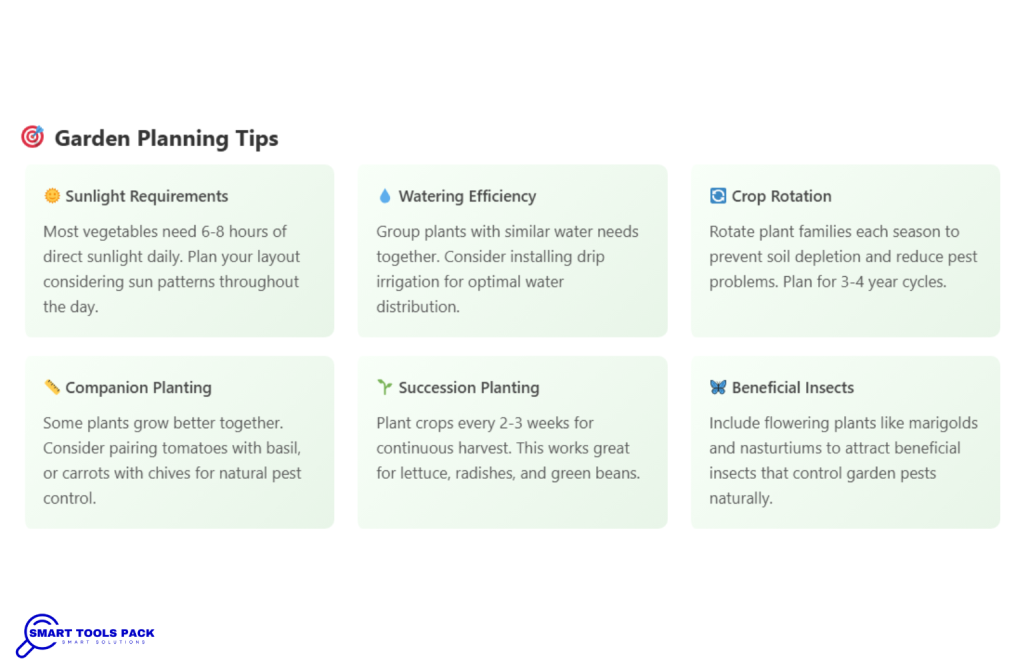
🎯 Garden Planning Tips
Most vegetables need 6-8 hours of direct sunlight daily. Plan your layout considering sun patterns throughout the day.
Group plants with similar water needs together. Consider installing drip irrigation for optimal water distribution.
Rotate plant families each season to prevent soil depletion and reduce pest problems. Plan for 3-4 year cycles.
Some plants grow better together. Consider pairing tomatoes with basil, or carrots with chives for natural pest control.
Plant crops every 2-3 weeks for continuous harvest. This works great for lettuce, radishes, and green beans.
Include flowering plants like marigolds and nasturtiums to attract beneficial insects that control garden pests naturally.
Introduction
Starting a garden is exciting, but one of the biggest challenges most gardeners face is figuring out how to make the best use of space. Too much crowding can stunt plant growth, while leaving too much empty ground wastes valuable gardening area. This is where the Garden Spacing Calculator becomes an essential tool.
Designed for both beginners and experienced gardeners, this calculator provides everything you need to plan your garden layout, calculate how many plants you can grow, and even visualize the results. With interactive features and educational value, it transforms gardening from guesswork into a fun, science-backed process.
(Related Tool: Try our Concrete Calculator to plan building projects with accuracy.)
1. Garden Layout Planning
One of the most important steps in gardening is deciding how to arrange your plants. The Garden Spacing Calculator makes this process simple and efficient:
- Interactive Calculator: Input the length and width of your garden in feet and select from a variety of common plants. Each plant comes with its own predefined spacing requirement, ensuring accuracy.
- Custom Spacing Option: Not every gardener sticks to the same crops. If your plant isn’t on the list, you can manually set custom spacing in inches.
- Planting Pattern Selection: Choose between square grid planting (for neat alignment) or triangular/offset patterns (for maximum space utilization).
- Quick Plant Selection: Fun plant icons such as 🍅 (tomato), 🥬 (lettuce), 🌶️ (pepper), and 🥕 (carrot) allow for instant recognition and faster planning.
This first step ensures that your garden plan is tailored exactly to your available space and plant types.
2. Detailed Results and Metrics
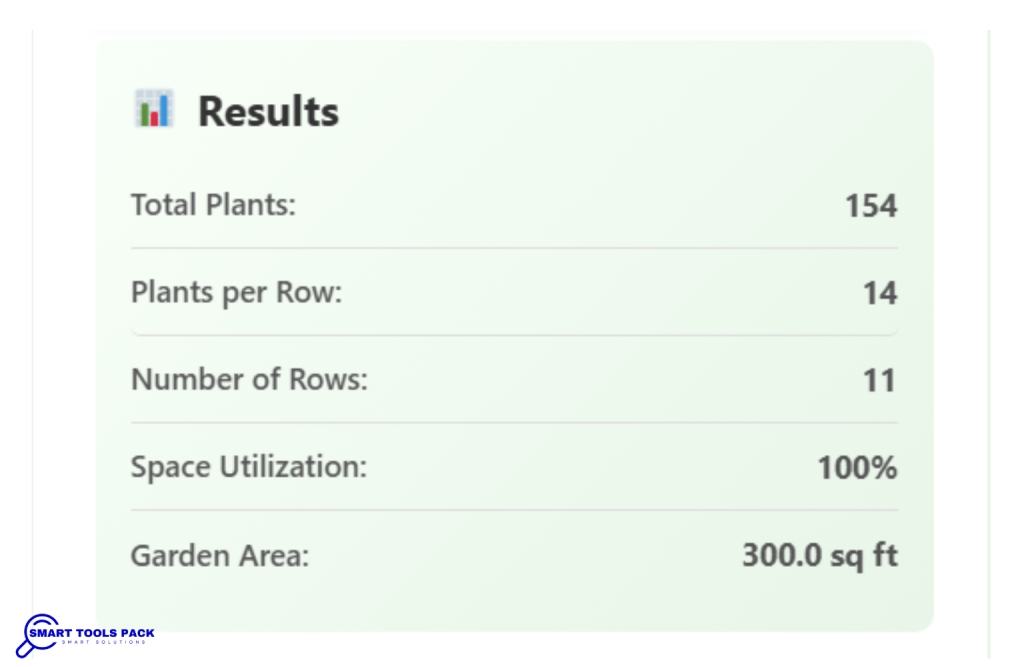
After entering your information, the calculator doesn’t just stop at numbers — it provides detailed results that give you real insights:
- Total Plants Calculation: Find out how many plants can fit within your specified dimensions.
- Row Planning: Understand how many plants will fit per row and how many rows you can create.
- Space Utilization: See the efficiency of your garden space as a percentage, helping you identify wasted or unused areas.
- Garden Area: The calculator shows the total square footage of your garden, giving you a better overview.
(Helpful resource: Learn more about square foot gardening from the University of Minnesota Extension.)
3. Visual Garden Layout
Numbers are helpful, but seeing your plan come to life is even better. The Garden Spacing Calculator includes powerful visualization features:
- Interactive Visualization: A dynamic grid shows how plants will be arranged in your garden.
- Plant Icons: Plants are represented by specific icons or simple dots, depending on your preference.
- Responsive Design: Whether you’re on a desktop or mobile device, the visualization adjusts to your screen size for a seamless experience.
This visual layout ensures you can picture your garden before planting a single seed.
4. Advanced Visualization Features
For those who want an even deeper level of planning, the calculator offers advanced options:
- 3D View: Rotate your garden layout in three dimensions to see it from different angles.
- Seasonal View: Imagine how your garden will look in spring, summer, fall, and winter.
- Sun/Shade Overlay: Use the time slider to view how sunlight moves across your garden during the day, helping you plan sun-loving versus shade-loving plants.
(External guide: The Royal Horticultural Society has excellent resources on sunlight and shade planning in gardens.)
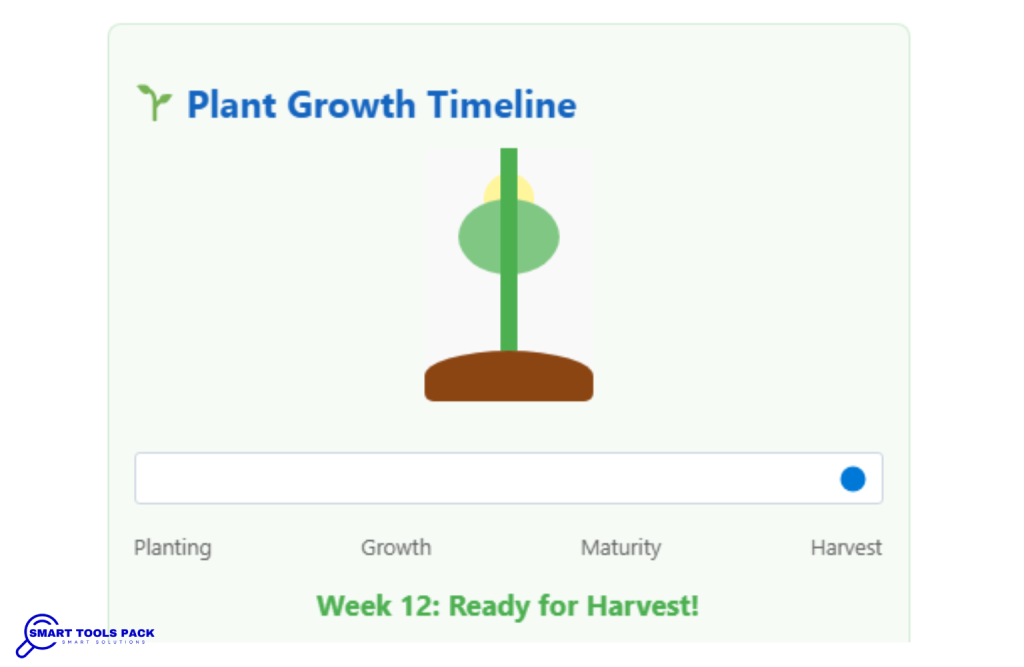
5. Plant Growth Timeline
Gardening isn’t just about planting seeds — it’s about nurturing growth over time. The Garden Spacing Calculator provides an interactive plant growth timeline:
- Growth Slider: Move the slider to see plant development stages, from germination to harvest.
- Growth Stages: View each phase — early growth, vegetative, flowering/fruiting, and harvest.
- Week-by-Week Progression: Understand what to expect each week for your chosen plant type.
- Visual Growth Representation: Plants grow taller, leaves expand, and fruits or flowers appear in the visualization.
This not only helps you plan but also educates you about the life cycle of your plants.
6. User-Friendly Interface
A great tool should be easy to use, and the Garden Spacing Calculator delivers with:
- Intuitive Design: Clear sections for input, results, and visualization.
- Real-Time Updates: Changes are instantly reflected as you adjust inputs.
- Loading Animation: Simple animations provide feedback while calculations are being processed.
- Responsive Layout: Fully optimized for desktops, tablets, and smartphones.
Even beginners with little tech knowledge can navigate and use the calculator effortlessly.
7. Educational Value
Beyond helping you plan your garden, the tool offers valuable learning opportunities:
- Plant Spacing Knowledge: Learn proper distances for healthier crops.
- Growth Timeline Education: Understand how plants change as they mature.
- Garden Planning Skills: Improve your ability to design efficient and productive gardens.
- Seasonal Awareness: Gain insights into how seasonal changes impact your plants.
This makes the Garden Spacing Calculator more than just a tool — it’s also an educational resource for anyone passionate about gardening.
Why Gardeners Need This Calculator
Traditional gardening often involves guesswork. You might plant too close, leading to overcrowded roots, or too far apart, wasting soil. The Garden Spacing Calculator removes these uncertainties.
It’s especially valuable for:
- Urban Gardeners with limited space.
- Beginner Gardeners learning about spacing and layouts.
- Experienced Gardeners who want advanced visualization features.
- Educational Institutions teaching agriculture or gardening basics.
No matter your level, this tool simplifies and enriches your gardening journey.
Conclusion
The Garden Spacing Calculator transforms the way you plan, visualize, and grow your garden. From calculating spacing to generating 3D visualizations and tracking plant growth timelines, it provides everything you need in one place.
Whether you’re planting a small backyard vegetable patch or designing a larger seasonal garden, this tool saves time, maximizes space, and enhances your knowledge. Gardening should be enjoyable, and with the Garden Spacing Calculator, it becomes both easier and more rewarding.